


In short: Málaga province has two designations of origin managed by the same Regulatory Council, founded in 1933: DO Málaga, for sweet and fortified wines made from Moscatel and Pedro Ximénez, and DO Sierras de Málaga, created in 2001, for still whites, rosés and reds. To pair with coastal cooking, dry Moscatel whites are wonderful with fish; reds from the Serranía de Ronda, with meat; and sweet wines, with desserts and cheese.
For centuries, Málaga wine was one of the most famous in Europe. It was exported to England, Russia and America, and appeared on the tables of kings and writers.
Today it is enjoying a second youth. Alongside the traditional sweet wines, which remain gems of winemaking, there are dry whites, rosés and reds that surprise anyone trying them for the first time.
In this guide we explain what Málaga wines are like, which grapes and areas define them and, above all, how to pair them with Costa del Sol cooking.
We write it from Caliu, in La Carihuela, where many of the questions we get in the dining room are about wine. So we wanted to set out what we usually explain at the table.
Málaga’s two designations of origin
The first thing to know is that two designations of origin coexist in Málaga, with the same territory but very different wines.
| DO Málaga | DO Sierras de Málaga | |
|---|---|---|
| Created | Regulatory Council in 1933 | 2001 |
| Type of wine | Sweet, fortified and some traditional dry wines | Still whites, rosés and reds |
| Main grapes | Moscatel and Pedro Ximénez | White and red, native and international |
| Key sub-zone | Axarquía, Montes, Norte | Serranía de Ronda |
Both are managed by a single Regulatory Council, created on 8 September 1933 at the request of the province’s winemakers’ guilds. It is one of the oldest bodies of its kind in Spain.
The same Council also protects Pasas de Málaga, Málaga raisins, another designation of origin product linked to the Moscatel grape.
The production areas
The territory of both designations covers 67 municipalities in the province, divided into five main areas, each with its own climate, soil and grapes.
Axarquía
East of the capital, with vineyards on very steep slate slopes, often worked by hand. It is the land of Moscatel of Alexandria and of Romé, a native grape that is being revived.
Asoleo is still practised here: the grapes are dried in the sun on drying beds called paseros to concentrate their sugars before making sweet wines and raisins.
Montes de Málaga
Just north of the city. A historic area of Pedro Ximénez and Moscatel, with fewer vineyards today than in the past but a great tradition.
Norte
Around Antequera and Mollina. Pedro Ximénez and Doradilla, another native variety of the province, dominate.
Costa Occidental and Manilva
At the western end of the coast, with a Moscatel tradition on alluvial soils.
Serranía de Ronda
The highest area, with vineyards at around 750 metres. Many of the province’s visitable wineries are here, as are many of the DO Sierras de Málaga reds.
Alongside international grapes such as Cabernet Sauvignon, Merlot, Syrah and Chardonnay, Tempranillo and other Spanish varieties are grown.
Málaga’s grapes
Moscatel of Alexandria
Málaga’s great grape. Aromatic, floral and fruity. It produces top-quality sweet wines as well as fresh, perfumed dry whites, perfect for coastal cooking.
Moscatel Morisco
Also called small-berried Moscatel. Finer and more delicate, authorised in both designations.
Pedro Ximénez
Known locally as Pero Ximén. It is the base of many sweet and fortified wines, dark in colour with notes of raisins, coffee and caramel.
Doradilla
A white variety native to the Norte area, rare today.
Romé
A native grape of the Axarquía, in red and white versions. Several boutique projects are reviving it to make rosés and light reds with lots of personality.
Reds in Ronda
Tempranillo, Syrah, Merlot, Cabernet Sauvignon, Petit Verdot, Garnacha and Tintilla de Rota, among others, produce modern-style reds with good acidity thanks to the altitude.
Málaga’s sweet wines: how to understand them
The label on a sweet Málaga wine can seem complicated. These are the most common categories.
- Moscatel: made with at least 85% of this grape. Aromatic, with floral and ripe fruit notes.
- Pedro Ximénez: dense, dark, with notes of raisins, figs and coffee.
- Lágrima: made only with the must that flows from the grapes without pressing. One of the finest and most prized.
- Pajarete: a traditional, amber-coloured wine, less sweet than others.
- Dulce color: with added arrope, the cooked must that gives it its characteristic dark colour.
- Seco: dry Málaga wines also exist, with a historic tradition.
Depending on ageing, terms such as noble, añejo or trasñejo may also appear, from less to more ageing.
A little history
Vine growing in Málaga goes back to antiquity, with the Phoenicians and Romans. During the Andalusi period, grape and raisin production continued.
Between the eighteenth and nineteenth centuries, Málaga wine had its golden age. It was known as Mountain Wine in England and exported to half the world.
In 1878, phylloxera, a pest that attacks vine roots, reached Málaga. It was the first confirmed outbreak in Spain and destroyed much of the province’s vineyards.
Recovery was slow. The twentieth century brought the Regulatory Council in 1933 and, in the twenty-first, the creation of DO Sierras de Málaga and a new generation of wineries that have restored the prestige of the province’s wines.
How to pair Málaga wines with coastal cooking
This is where it gets interesting. Costa del Sol cooking and Málaga wines grew up together, and they get on very well.
With fried fish
Málaga-style fried fish needs a fresh wine with good acidity to cleanse the palate between bites.
A dry Moscatel white from the Axarquía is an excellent choice: aromatic, light and very refreshing. Dry rosés also work.
With sardine espetos
Sardines are oily and have an intense, smoky flavour. Order a white with some body or a fresh, dry rosé. And if you fancy something different, a fino from the neighbouring Andalusian designations also goes very well.
With shellfish and grilled fish
Prawns, clams or grilled white fish call for clean, mineral whites. Ronda whites from higher vineyards offer freshness and finesse.
With ajoblanco and gazpacho
Ajoblanco, a cold almond soup typical of Málaga, is usually served with Moscatel grapes. A dry white from that same grape creates a perfect harmony.
With seafood rice dishes
A white aged on lees or a structured rosé goes well with the intensity of a seafood rice.
With meat
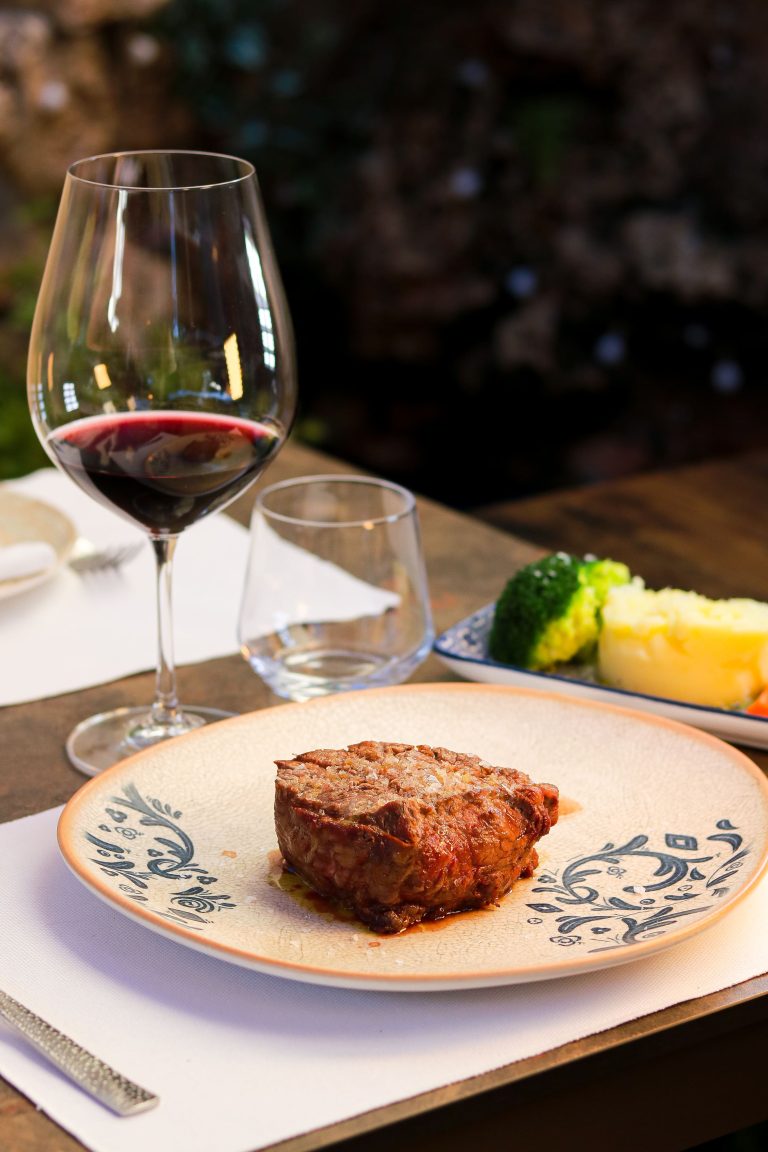
Reds from the Serranía de Ronda are the natural choice. For grilled meats, look for reds with some ageing. For more delicate meats, young, fresh reds.
With steak tartare
A cold, intense dish with acidity. Light reds with good acidity, dry rosés or even a sparkling wine suit it very well. There are more details in our guide to steak tartare.
With cheese
Cured cheeses go very well with Ronda reds. Blue cheeses, on the other hand, find their ideal partner in a Pedro Ximénez or a sweet Moscatel.
With desserts
This is where Málaga’s sweet wines shine. A sweet Moscatel with fruit or creamy desserts, a Pedro Ximénez with chocolate or vanilla ice cream, and a Lágrima with nuts.
Tip: try pouring a splash of Pedro Ximénez over vanilla ice cream. It is a simple, spectacular dessert.
Quick pairing table
| Dish | Recommended Málaga wine |
|---|---|
| Málaga-style fried fish | Dry Moscatel white |
| Espetos | Dry rosé or full-bodied white |
| Grilled shellfish | Fresh white from Ronda |
| Ajoblanco | Dry Moscatel white |
| Seafood rice | White aged on lees or structured rosé |
| Grilled meats | Aged red from Ronda |
| Steak tartare | Light red or dry rosé |
| Blue cheeses | Pedro Ximénez or sweet Moscatel |
| Chocolate desserts | Pedro Ximénez |
| Fruit desserts | Sweet Moscatel |
What temperature to serve them at
- Dry whites and rosés: between 8 and 10 °C.
- Young reds: between 12 and 14 °C. In summer, a little cooler than usual.
- Aged reds: between 15 and 17 °C.
- Sweet Moscatel: between 8 and 10 °C.
- Pedro Ximénez and aged sweet wines: between 12 and 14 °C.
On the Costa del Sol, with high temperatures much of the year, it is worth serving all wines a little cooler than the manuals say.
Wine tourism: visiting wineries from the coast
If you are staying in Torremolinos or Benalmádena and want to visit Málaga’s wineries, these are the most common options:
- Serranía de Ronda: just over an hour by car. It has many visitable wineries, ideal for a full-day route.
- Axarquía: east of Málaga, with wineries in mountain villages and sea views. Some offer tastings with lunch.
- Málaga city: the Wine Museum and various wine shops let you get started without leaving the city.
Bear in mind that Ronda and the Axarquía are at opposite ends of the province, more than two hours apart by car. It is best to give them separate days and book visits in advance.
How to taste a Málaga wine without being an expert
You do not need to be a sommelier to enjoy a wine. Just pay attention to three things.
Sight
Tilt the glass over a white background. Moscatel whites are usually pale and bright; aged sweet wines, amber or mahogany; Pedro Ximénez, almost black. Colour already tells you a lot about a wine’s age and style.
Nose
Swirl the glass gently and smell. In a dry Moscatel you will notice white flowers, fresh grape and citrus. In a sweet wine, raisins, honey, figs or coffee. In a Ronda red, red or black fruit and, if it is aged, spice and toast.
Palate
Take a small sip and let it move around your mouth. Notice the acidity, which gives freshness; the sweetness, if any; and the length, how long the flavour lingers after swallowing.
With these three guidelines, any dinner becomes a little tasting. And it is the best way to find out which wines you really like.
How to choose a Málaga wine at a restaurant
- Look for the DO seal: Málaga or Sierras de Málaga on the label.
- Ask about the grape: dry Moscatel is a surprise for many.
- Take advice: the dining room team knows which wine goes best with each dish.
- Try by the glass: if the restaurant offers it, it is the best way to discover several wines.
- Save a sweet wine for the end: a Moscatel or a Pedro Ximénez with dessert is the perfect finish.
Myths about Málaga wines
“Málaga wine is only for dessert”
False. Dry Moscatel whites and Ronda reds easily accompany a full meal. Sweet wines are only part of the story.
“Moscatel is always sweet”
Not at all. Moscatel of Alexandria vinified dry produces aromatic yet dry whites, very refreshing and food-friendly.
“It is too hot in the south to make good red wine”
Altitude changes everything. In the Serranía de Ronda, with vineyards above 700 metres, cool nights allow reds with good acidity and elegance.
“Sweet wines are all the same”
Between a young Moscatel, a Lágrima, a Pajarete or a trasñejo Pedro Ximénez there is a world of difference in colour, sweetness, aromas and texture.
Málaga wines by season
- Spring: dry Moscatel whites and young rosés, with the first terrace dinners.
- Summer: well-chilled whites and rosés with fish, espetos and ajoblanco. Also light reds served slightly cool.
- Autumn: Ronda reds with mushrooms, meat and spoon dishes. It is also harvest time, with wine festivals in several villages in the province.
- Winter: aged reds and, to end dinner, aged sweet wines with turrón, nuts and cheese.
How to keep an open bottle
If you do not finish the bottle, these tips will help you enjoy it another day.
- Still whites, rosés and reds: corked and in the fridge, they keep well for two or three days.
- Sweet fortified wines: thanks to their alcohol and sugar, they last much longer once open, often several weeks if well closed and kept somewhere cool.
- Sparkling wines: with a special stopper, one or two days at most.
Aged sweet wines can even gain nuances over the days once opened. That is why it is common to always have an open bottle of Moscatel or Pedro Ximénez at home to go with a dessert or an after-dinner chat.
Wine and dinner at Caliu
At Caliu we cook seasonal produce, with dishes from sea and land that lend themselves to all kinds of pairings. From the fish of the day to our steak tartare prepared at the table or a board of Spanish cheeses.
If you want to discover Málaga wines or simply get the bottle right, ask us in the dining room. We will help you choose according to what you are having.
We open for dinner only, from 7 pm to 11:30 pm, at Av. de España 18, in Montemar. You can see the menu or the 28 € daily menu, available from 7 pm to 9 pm, with drinks charged separately.
Frequently asked questions about Málaga wines
Which designations of origin does Málaga have?
Two: DO Málaga, for sweet and fortified wines, and DO Sierras de Málaga, for still wines.
Are there only sweet wines in Málaga?
No. Since 2001, DO Sierras de Málaga has covered high-quality dry whites, rosés and reds.
What is Lágrima wine?
A sweet wine made only with the must the grapes release without pressing. It is one of Málaga’s finest.
Which wine goes with fried fish?
A dry Moscatel white or a fresh rosé.
What is asoleo?
Drying grapes in the sun to concentrate their sugars, typical of the Axarquía.
Where are Málaga’s wineries?
Mainly in the Serranía de Ronda, the Axarquía and the Norte area, around Mollina and Antequera.
Conclusion
Málaga wines are much more than the classic after-dinner sweet wine. There are fresh whites, characterful rosés and high-altitude reds that go perfectly with coastal cooking.
Next time you have dinner on the Costa del Sol, order a local wine. And if you do not know which, let someone advise you.
At Caliu we will be happy to help. Book your table and raise a glass of Málaga wine by the sea.