



In short: in one day you can see the essentials of Torremolinos on foot. Start on Calle San Miguel and at the Torre de Pimentel, walk down the Cuesta del Tajo to Bajondillo and the Casa de los Navajas, follow the promenade to La Carihuela, head up to La Batería Park in the afternoon and finish with the sunset and dinner in Montemar, next to Benalmádena Costa.
Torremolinos is known as a sun-and-beach destination, and it is one. But behind the hotels lies a story of Nasrid towers, water mills, fishermen and the film stars who came in the fifties and sixties.
The best part is that almost everything is close together. With good shoes and a little planning, in a single day you can see the historic centre, the promenade, the fishing quarter of La Carihuela and the town’s great urban park.
Here is a route from east to west, from Calle San Miguel to Montemar, designed to be done on foot and to end with a good dinner by the sea.
A little history to understand what you will see
Before you start walking, it is worth knowing where Torremolinos comes from. The route makes much more sense that way.
Phoenicians and Romans passed along this coast, but the town grew up around the Nasrid tower we now call Torre de Pimentel and the flour mills powered by water from the local springs. For centuries it was a small place of millers, farmers and fishermen.
At the start of the twentieth century the first well-off families and the first summer houses arrived. The Casa de los Navajas, from 1925, is the best example of that period.
The big change came in the fifties and sixties. Torremolinos became one of the most famous destinations in Europe, with new hotels, nightlife and visitors from all over the world. Neighbourhoods such as Montemar, La Colina and Los Álamos grew in those years.
Torremolinos was part of the municipality of Málaga for a time and regained its independence in 1988. It has kept changing since, but it still has that mix of fishing village, shopping centre and beach resort you will see on this route.
Before you start: how to plan
The full route is about 6 or 7 kilometres on foot, almost all flat apart from the walk down the Cuesta del Tajo and the climb up to La Batería Park.
- Start early. At 9:30 or 10 am the centre is quiet and the light is good for photos.
- Bring water and a hat. In summer, between 1 pm and 5 pm the sun is very strong.
- Use the train if you need to. The C-1 Cercanías line stops in central Torremolinos and at Montemar Alto, next to La Batería Park. It can save you a climb.
- Book dinner if you go at the weekend or in high season.
Morning: Calle San Miguel and the centre
Calle San Miguel is the main shopping street of Torremolinos. It is pedestrianised, full of shops, cafés and bars, and one of the busiest streets on the Costa del Sol.
In the morning it is the ideal place for breakfast and a relaxed start. Take the chance to see the eighteenth-century church of San Miguel Arcángel, on Plaza de los Santos Arcángeles, and the nearby Plaza de La Nogalera, an architectural complex closely tied to the golden years of tourism.
Plaza Costa del Sol
Nearby is Plaza Costa del Sol, one of the town’s meeting points. Around it you will find the tourism interpretation centre, with exhibitions on the history of tourism in Torremolinos.
It is a good place to understand how a village of millers and fishermen became, within a few decades, one of the most famous destinations in Europe.
Torre de Pimentel, where the name comes from
At the end of Calle San Miguel, right where the walk down to the sea begins, stands the Torre de los Molinos, now known as Torre de Pimentel.
It is a Nasrid watchtower built around 1300 to guard the coast of the Kingdom of Granada and protect the mills and springs in the area. It later took the name of Rodrigo de Pimentel, a soldier who fought with the Catholic Monarchs in the conquest of Málaga at the end of the fifteenth century.
The town’s name comes from the tower and the water mills that once stood here: torre (tower) and molinos (mills). It is one of the most photographed spots in Torremolinos.
Down to the sea along the Cuesta del Tajo
Next to the tower begins the Cuesta del Tajo, a stepped street leading down to Bajondillo between white houses, small shops and bougainvillea.
It is one of the prettiest walks in the centre. As you go down, the sea appears between the façades. Take it slowly, especially if it is hot: the climb back up is harder.
Casa de los Navajas
At the bottom, opposite Bajondillo beach, is the Casa de los Navajas, the most unusual building in Torremolinos.
It is a Neo-Mudejar mansion built in 1925 by the Navajas family, linked to the sugar industry. Its exposed brick, tiles and arches recall Nasrid architecture and the Alhambra.
The Town Hall bought it in 2000 and restored it. Today it is a cultural venue used for exhibitions, concerts and civil weddings. Its terrace has a great view over Bajondillo.
Guide opening hours: it usually opens from Wednesday to Sunday, morning and afternoon, with longer afternoon hours in summer. Entry is usually free. Check the Torremolinos tourism website first, as it can change because of events.
Bajondillo and El Morro
Bajondillo is the town-centre beach, wide and lively. Next to it is El Morro, a headland separating Bajondillo from La Carihuela, with lovely views along the coast.
The Senda Litoral also passes here, the large project for a seaside path linking the coastal towns of Málaga province.
Midday: the promenade to La Carihuela
From Bajondillo, follow the promenade west. You will round the Punta de Torremolinos and enter La Carihuela, the old fishing quarter.
It is a good time for a swim if you are there in season, or for a light lunch. La Carihuela is famous for its fried fish and sardine espetos, and there are plenty of options right on the beach.
If you want to know everything about the beach, see our complete guide to La Carihuela beach.
Wander the neighbourhood
Do not stay only on the seafront. Calle Bulto, parallel to the promenade, and the inner streets keep the feel of a fishing village: low houses, small squares and neighbours sitting at their doors in the evening.
Look for the parish church of Nuestra Señora del Carmen, the heart of the neighbourhood’s big festival every 16 July.
Afternoon: La Batería Park
When the heat sets in, there is nothing better than the shade of La Batería Park, the great green lung of Torremolinos, opened in 2007.
It covers more than 74,000 square metres, with over a thousand trees of about 25 species and an artificial lake of more than 9,000 square metres with rowing boats for hire.
Its name comes from the old coastal defence battery that stood here. Artillery cannons and two underground bunkers are still preserved.
The must-do is to go up the viewing tower, about 15 metres high and with a lift. From the top you can see La Carihuela, Bajondillo and much of the Bay of Málaga.
If you are with children, the Venetian carousel and the play areas are a guaranteed success.
Getting there: from La Carihuela it is about a 15-minute walk uphill. If you come by train, Montemar Alto station is right next to it.
Sunset: Montemar and the end of the promenade
Walk down from the park towards the sea and follow the promenade west to Montemar, the last stretch of La Carihuela before Benalmádena Costa.
It is the quietest part of the promenade and has the best view of the sunset, with the sun going down over Benalmádena and Puerto Marina.
Montemar was one of the first tourist neighbourhoods in Torremolinos, with villas from the forties, fifties and sixties and the old Parador de Montemar, one of the town’s first hotels.
If you still have energy, another 12 minutes on foot takes you to Puerto Marina.
Evening: dinner by the sea in Montemar
After a whole day walking, what you want is to sit down without hurry.
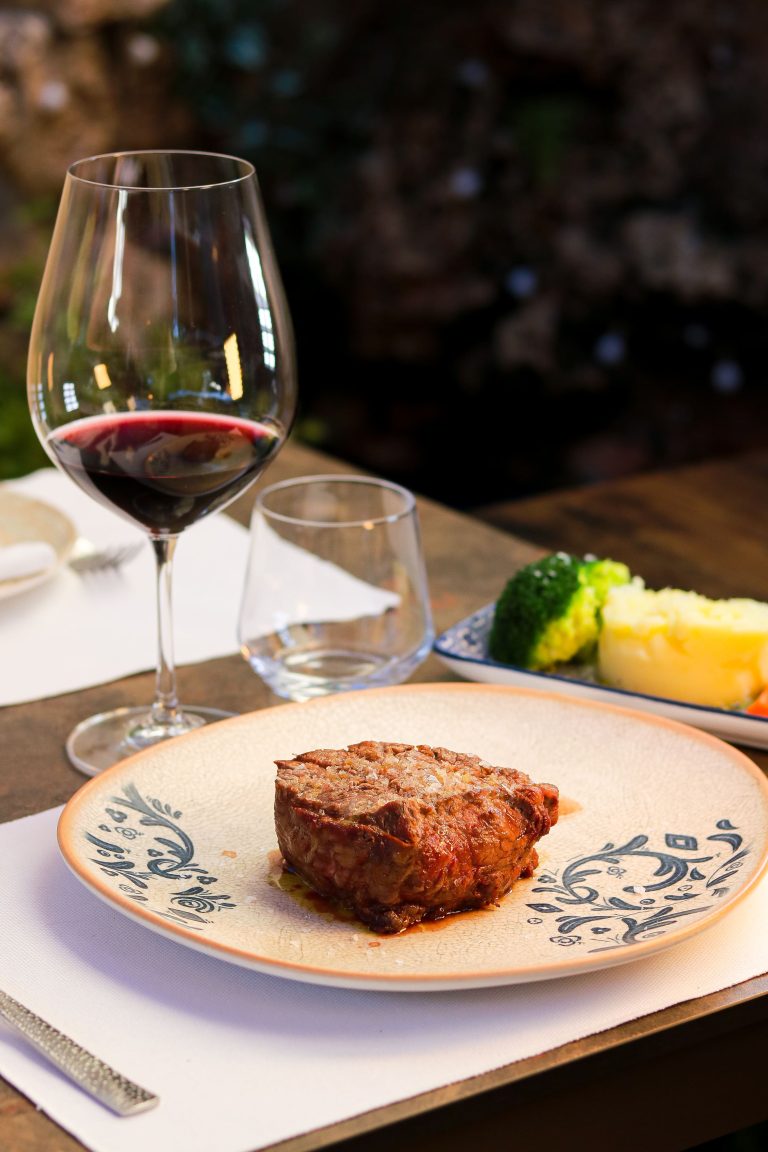
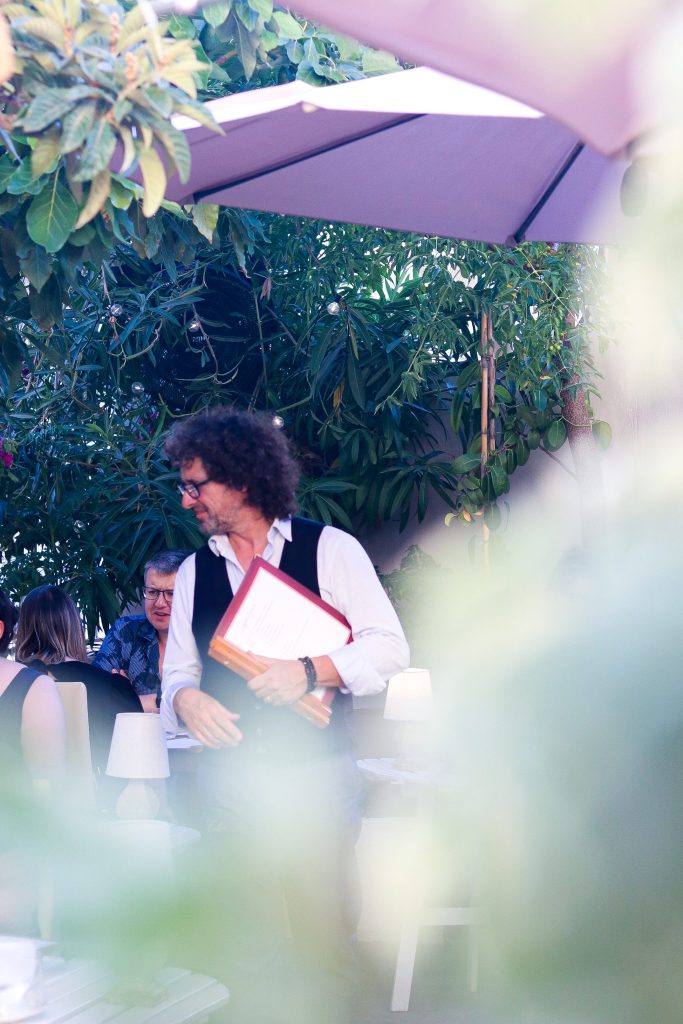
At Av. de España, 18, right where La Carihuela meets Montemar, is Caliu. We open every day for dinner only, from 7 pm to 11:30 pm.
We cook Mediterranean, Andalusian and European food with seasonal produce: fish, charcoal-grilled meats, homemade croquettes and steak tartare prepared at the table. To go with it, a wine and cocktail list.
You can see the menu or the 28 € daily menu, served from 7 pm to 9 pm.
The route at a glance
| Time | Stop | What to do |
|---|---|---|
| 9:30 am | Calle San Miguel | Breakfast, church and Plaza de La Nogalera |
| 10:30 am | Torre de Pimentel | The tower that gives the town its name |
| 11 am | Cuesta del Tajo | Walk down between white houses |
| 11:30 am | Casa de los Navajas | Neo-Mudejar mansion from 1925 |
| 12:30 pm | Promenade to La Carihuela | Swim, fishing quarter and lunch |
| 4:30 pm | La Batería Park | Lake, cannons and viewing tower |
| 7:30 pm | Montemar | Sunset at the end of the promenade |
| 8:30 pm | Dinner | Dinner by the sea |
If you have more time
If you are staying several days, these places round off the visit very well:
Molino de Inca Botanical Garden
It is the last of the old water mills that gave the town its name. Today it is a botanical garden restored in 2003, watered by a spring, with hundreds of plant species, a small Japanese garden, a cypress maze and a replica of the mill powered by water.
Cañada del Lobo and the hills
A few minutes from the centre, the Torremolinos hills offer hiking trails and one of the best natural viewpoints in the province, at Cañada del Lobo.
Puerto Marina and Benalmádena
Right next door, Benalmádena has its famous marina, the cable car up Mount Calamorro and the Enlightenment Stupa. We cover it in our guide to things to do in Puerto Marina.
The same route with children
If you are travelling with children, the route works just as well with a few changes:
- Shorten the morning. Calle San Miguel, Torre de Pimentel and the walk down to Bajondillo are enough. Leave the Casa de los Navajas for another day if they get tired.
- Beach before lunch. La Carihuela has calm water and play areas on the promenade.
- Siesta in the park. La Batería has shade, boats on the lake, a carousel and lots of space to run.
- Early dinner. From 7 pm you can already have dinner in many places in the area, without waiting and while the children still have energy.
With a pushchair, avoid the Cuesta del Tajo and go down to the sea by the ramped streets near Plaza Costa del Sol.
If it rains or the weather is bad
It rarely rains in Torremolinos, but when it does it is good to have a plan B:
- Visit the Casa de los Navajas and the tourism interpretation centre in the centre.
- Take the train to Benalmádena and visit the Sea Life aquarium in Puerto Marina.
- Do a café and shopping route along Calle San Miguel.
- When it clears, go and see the sea: after the rain the light over the bay is spectacular.
Places to rest along the way
The route passes through areas with lots of choice, so you will not be short of places to stop. Some ideas for your breaks:
- Mid-morning coffee on Plaza Costa del Sol or next to the Torre de Pimentel.
- Ice cream or a cold drink on the Bajondillo promenade, facing the sea.
- Casual lunch in La Carihuela: fried fish is the classic option.
- Afternoon snack in the shade on the terrace in La Batería Park.
- Unhurried dinner at the end of the promenade, in Montemar.
Drink water often, especially in summer. Between the beach and the park there are stretches with little shade.
When to do this route
The route works all year, but it changes a lot with the seasons:
- Spring and autumn: the best time. Mild temperatures, fewer people and lovely light.
- Summer: lots of atmosphere and long days. Do the town part early and leave the beach and the park for the afternoon.
- Winter: quiet and bright. Ideal for walking in the sun and a relaxed dinner.
If you coincide with the Virgen del Carmen (16 July) or the San Miguel festivities (late September), you will see Torremolinos at its most festive.
Frequently asked questions
Can you see Torremolinos in one day?
Yes. The essentials (centre, Torre de Pimentel, Casa de los Navajas, promenade, La Carihuela and La Batería Park) can be seen in a day on foot.
What is most typical of Torremolinos?
Calle San Miguel, the Torre de Pimentel, the Casa de los Navajas and the fishing quarter of La Carihuela, with its fried fish and sardine espetos.
Do you need a car?
No. The route is done on foot and the C-1 Cercanías train connects the centre with Montemar Alto if you want to skip a climb.
Where to watch the sunset in Torremolinos?
The end of the La Carihuela promenade, in Montemar, and the viewing tower in La Batería Park are two of the best spots.
Where to have dinner at the end of the day?
La Carihuela has lots of choice. If you are looking for relaxed Mediterranean cooking, Caliu is at Av. de España, 18, in Montemar, every night from 7 pm.
Where does the name Torremolinos come from?
From the Torre de los Molinos, the Nasrid tower from around 1300 now called Torre de Pimentel, and from the water mills that once stood in the area. Only the Molino de Inca survives today, turned into a botanical garden.
How many kilometres is the route?
About 6 or 7 kilometres on foot, almost all flat. The only slopes are the walk down the Cuesta del Tajo and the climb up to La Batería Park, which you can avoid by taking the train to Montemar Alto.
Can you do the route in reverse?
Yes. If you are staying in Montemar or Benalmádena Costa, you can start with La Batería Park and La Carihuela in the morning and finish in the centre in the afternoon, although you will miss the sunset at the end of the promenade.
Torremolinos, on foot and without hurry
Torremolinos is best understood on foot: from the tower that gives it its name to the sea, from the bustling centre to the fishing quarter, from the park to the sunset.
Do the route at your own pace, stop wherever you like and save the last hour for dinner by the sea.
If you would like to end at Caliu, book your table here. We will be waiting at the end of the promenade.